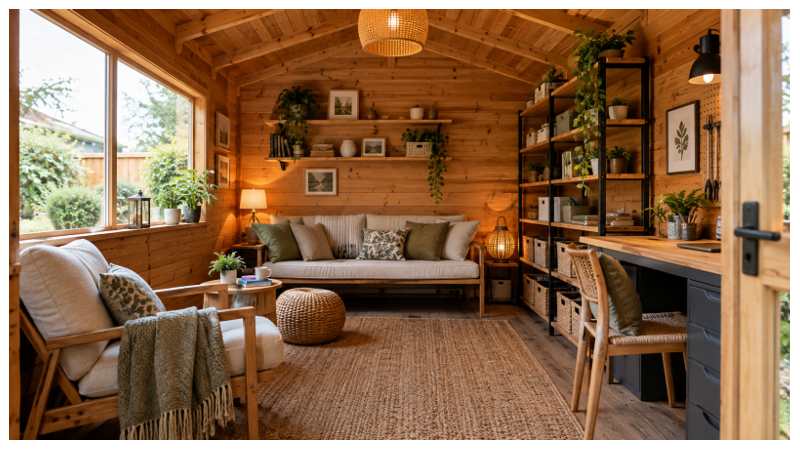
Some rooms feel complete because every material has a clear relationship with the next. Timber, stone, linen, metal, and light each contribute a different texture, while smaller decorative pieces add the final layer. Sea glass can bring gentle colour, translucency, and a softened surface to that composition. In living rooms, bedrooms, hospitality spaces, and retail interiors, it offers a way to add interest without making the scheme feel heavy.
Why sea glass works in calm interiors
Calm interiors often rely on a balance between solid materials and lighter details. A stone worktop or dark timber cabinet creates visual weight, while sea glass introduces a quieter note that can catch the light without dominating the room. Its softened appearance works well beside natural fabrics, pale walls, and simple ceramics, where texture matters as much as colour.
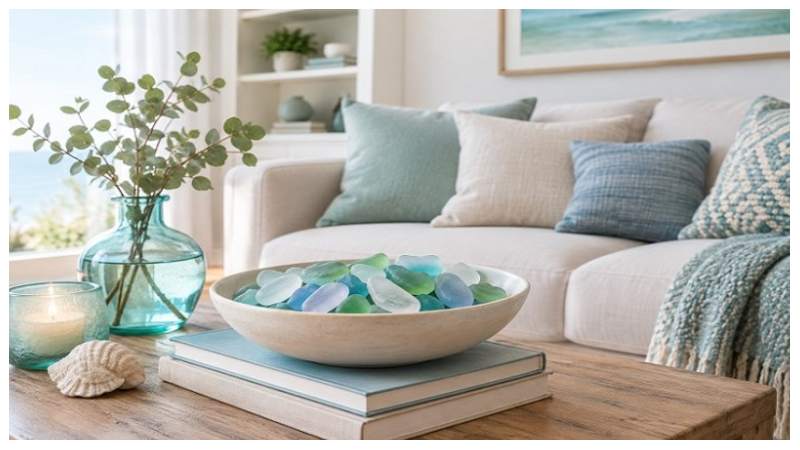
The material is also flexible in the way it is displayed. Pieces can sit in a shallow bowl, a clear vessel, or a tray on a console. Combined with branches, dried stems, or a small arrangement, they create a layered detail that still leaves space for the surface beneath to be seen. That transparency is useful when the room already has strong furniture or architectural features.
Choose the right scale for each room
Start with the surface and the distance from which it will be viewed. A small bedside table usually needs only a restrained group, while a long dining table can carry repeated details at measured intervals. On a wide sideboard, a fuller arrangement may provide the right amount of presence. The aim is to give the room rhythm rather than cover every open area.
Furniture can help determine the shape of the arrangement. Low seating and horizontal shelving may benefit from a little vertical height, while a tall bookcase or large artwork may be better balanced by something lower and wider. Repeating a similar colour or texture in more than one location can make an open-plan interior feel connected without making every display identical.
Keep everyday movement in mind as well. Leave enough room for doors, drawers, table settings, and cleaning. In a hallway or hospitality setting, use stable vessels and keep loose pieces away from edges. Decorative details are most successful when they support the way a room is used instead of creating another obstacle within it.
Build a palette around natural light
Light changes the way colour and texture are read. In a bright room, clear or pale pieces can keep a display airy and let the surrounding materials remain the focus. Deeper blue or green tones can give a neutral space more definition, particularly when they echo upholstery, artwork, or a view of the garden. Choose one dominant accent when the room already contains several finishes.
Look at the arrangement at different times of day. Morning light may make translucent pieces appear almost weightless, while evening lamps can bring out their colour and surface. Test the display from the main viewpoints and leave a little negative space around it. That breathing room is often what makes a small decorative detail feel deliberate rather than crowded.
A practical way to plan a coordinated scheme
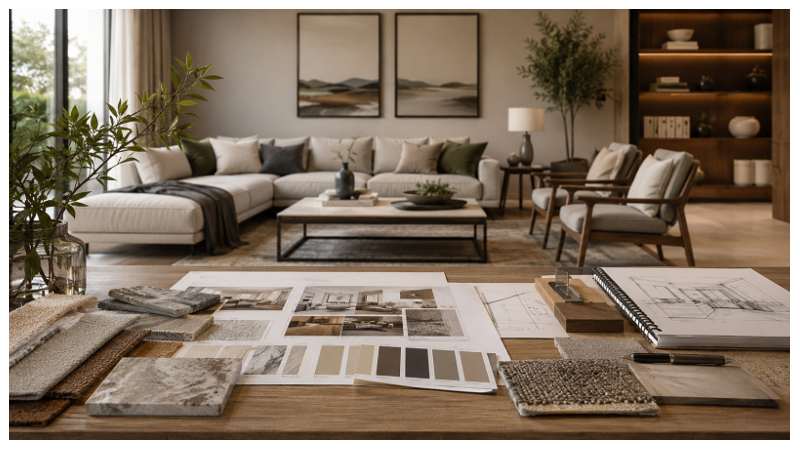
When several rooms or display points need to work together, compare colour and quantity before choosing the final arrangement. A useful starting point is a collection of wholesale sea glass, allowing the designer to see how the material works beside timber, stone, metal, and textiles. A small sample layout is more informative than selecting each piece separately, especially when the same accent will appear throughout a project.
Photograph the proposed display from its usual viewing height. Check whether it leaves enough space for books, tableware, menus, or products, and look at its silhouette against the background. This helps a team agree on a repeatable approach before installation.
Maintenance deserves attention too. Choose containers that can be cleaned easily, keep water away from vulnerable surfaces, and make sure the arrangement can be moved safely when the room is serviced. Practical details matter in hospitality, workplace, and retail spaces.
Use the material beyond one display
Sea glass does not need to stay on a coffee table. The same colour or texture can appear at an entrance, on a dining table, beside a bath, or within a retail display. Repeating the material creates a visual thread, especially when a home or venue has several connected zones.
In a home, the detail can move with the seasons without requiring a complete redesign. Pair it with fresh foliage, dried stems, or simple candlelight. In a commercial interior, it can carry a colour cue from reception into a lounge or dining space while remaining easy to adjust.
A soft detail with lasting value
Interior design does not need more objects on every surface to feel finished. It needs a clear relationship between colour, proportion, material, light, and daily use. Sea glass supports that relationship: it softens a palette, catches changing light, and gives a simple arrangement more depth. Selected with the room in mind, it helps the whole interior feel balanced and resolved.