
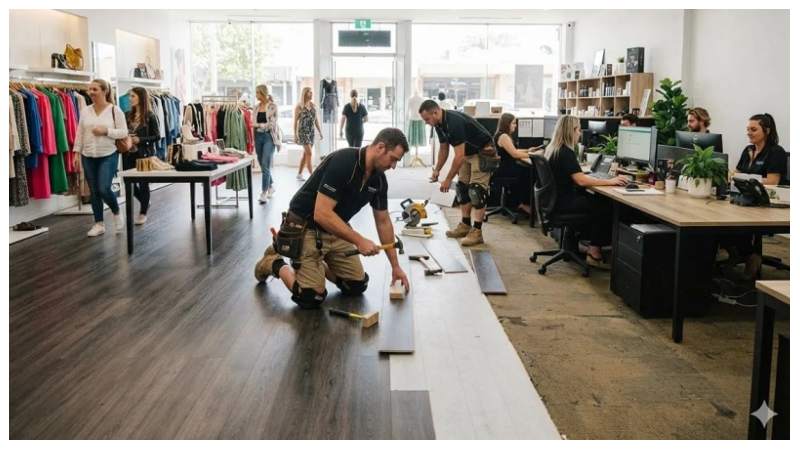
Picture a small retail shop in the middle of a busy December. Customers are browsing, the till keeps ringing, and a leaking pipe has just wrecked a section of the floor. Closing for a week isn’t an option. Choosing durable commercial flooring before trouble arrives spares you that scramble, and the decision gets much easier once you know what to look for. Here’s a practical way to think it through.
Count the Footsteps First
Start with traffic. A boutique that sees twenty customers a day has very different needs from a service centre where trolleys, pallets and delivery trucks roll through. Match the floor to the demands of your busiest week of the year, not the quiet average. Seasonal rushes are what really test a floor, so plan around them.
Then look at the entrance, the till point and the path to the stockroom. Those spots wear out first, and a slow walk around your premises will show where the pressure really sits before you pay for anything. Jot down the worst three spots and ask about them when you speak to suppliers.
Why Modular Beats Rolled Out
Tiles that lock together give you a floor you can fix in sections. Plastic floor tiles can be lifted out and replaced without stripping the whole area, which means the shop keeps trading while a damaged patch is fixed. Customers barely notice a single square being changed.
Fitting is quick as well. A small team can cover a medium room after hours, and staff are back at their desks by morning. Compare that with screed and curing times, where several days vanish before anyone is allowed to walk across the room. For a landlord’s building, a floor that lifts out cleanly is a real selling point at lease end.
Safety, Hygiene and First Impressions
Customers form opinions in seconds. A clean, even floor tells them the place is looked after, while chipped corners and stubborn stains tell a very different story about the business behind it. That impression affects whether a visitor stays or turns back at the door.
Slip risk matters too, particularly near doorways on rainy days. Textured surfaces add grip, and edges can be finished with ramps so that nobody catches a toe on a raised lip while carrying stock or a tray of coffee. In food outlets, pay extra attention to areas near the counter and the kitchen door.
Budget Beyond the Quote
The lowest price per square metre isn’t always the cheapest floor. Add up installation downtime, ongoing upkeep and how soon you might need to replace it, then compare the totals instead of the sticker numbers. Boring arithmetic like this often changes the winner.
Ask for samples, get thickness and finish confirmed in writing, and find out how delivery works for your area. A little homework at this stage prevents expensive surprises later, especially for branches in different cities. Consistent colours across branches also keep the look tidy.
Questions Worth Asking Your Supplier
Does the product suit your type of traffic, or was it designed for lighter use? Can single tiles be replaced years from now, and will colours still be available? These two questions alone separate serious suppliers from the rest. Their answers will tell you plenty about how they treat repeat customers.
Ask about lead times as well, particularly before a launch or a seasonal rush. A floor that arrives three weeks late and stalls your opening can cost far more than a slightly pricier option that turns up when promised. Always ask what happens if stock runs short mid-project.
Planning the Installation
Walk the space with a tape measure and a notebook. Record each room’s length and width, note pillars and counters, and mark where doors swing. A tidy sketch makes quoting faster and cuts the risk of ordering too little. Photos of awkward corners and drains help your supplier too.
Schedule the work for a quiet window, such as a Sunday or a public holiday. Move stock and shelving in stages so only one section is empty at a time, and keep a couple of spare tiles stored away for the future.
Conclusion: A Floor That Stays Out of the Way
A good floor works quietly in the background while you run the business. Focus on traffic, repairability and safety, and the rest tends to fall into place.
For ranges built with workplaces in mind, browse pvcfloortile.co.za and ask for a few samples.