Sculpture has a particular ability to influence the atmosphere of a room. Unlike paintings or prints, which are generally viewed from the front, a three-dimensional object changes its appearance as we move around it. Its silhouette, surface and relationship with the surrounding furniture can introduce a new focal point without altering the architecture of the space.
In contemporary interiors, sculptural objects are increasingly considered during the design process rather than added as an afterthought. Their placement can influence the balance of a room, draw attention to an architectural feature or introduce contrast within an otherwise restrained arrangement.
1. The Relationship Between Sculpture and Space
A sculpture should be considered in relation to the room it occupies. A tall, slender form can introduce height beside a low sofa or console table, while a broader composition may suit a substantial sideboard or an open area of the living room.
Scale is particularly important. A small ornament can disappear against a large expanse of wall, whereas an oversized piece may restrict movement or overwhelm nearby furniture.
The surrounding space is equally significant. A sculpture with an open, irregular silhouette often benefits from a relatively uncluttered background. Allowing sufficient distance between the object and neighbouring furniture helps its shape remain visible.
This approach works well in modern living rooms, where furniture tends to establish strong horizontal lines. Introducing a vertical or asymmetrical sculptural form can alter the visual rhythm without requiring additional furnishings.
2. Why Abstract Sculpture Works in Contemporary Interiors
Abstract sculpture allows form and material to take precedence over literal representation. Curves, intersecting shapes and geometric compositions can suggest movement or balance without depicting a recognisable subject.
This makes abstract pieces adaptable to different interior settings. A flowing metal sculpture may soften the appearance of a rectangular console table, while a more angular object can introduce definition beside curved upholstered furniture.
When selecting abstract sculptures, the relationship between silhouette, material and finish deserves careful consideration. An open aluminium structure creates a different visual impression from a solid resin form, even when both occupy a similar amount of space.
The choice should respond to the surrounding furniture rather than follow a particular decorative trend. A room containing substantial pieces may benefit from a lighter, open-form sculpture, while a minimal arrangement can accommodate an object with greater visual weight.
3. Materials That Influence the Finished Composition
Material plays an important role in how a sculpture interacts with light and nearby surfaces.
Metal sculptures can emphasise movement through reflected light. Polished finishes make contours more visible, while darker or aged metallic surfaces often create a quieter effect. Bronze and antique brass tones can complement timber, natural stone and warm upholstery without requiring an exact colour match.
Resin offers different possibilities, particularly where a more solid silhouette or textured surface is required. Pale finishes can appear understated against light walls, while black or charcoal forms create stronger contrast.
Stone and marble introduce additional visual weight through their density, grain and surface variation. Even relatively compact pieces can have a substantial presence when displayed on a console or decorative pedestal.
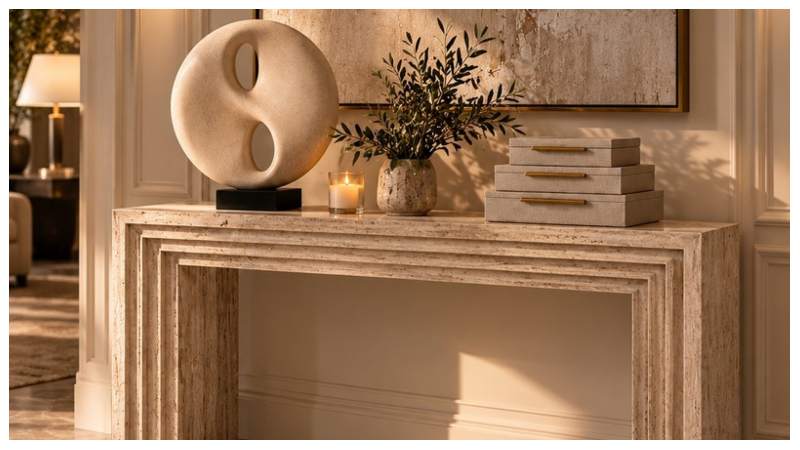
Combining contrasting materials can produce a more convincing arrangement than matching every object to the surrounding furniture. A dark metal sculpture against pale stone, for example, allows the characteristics of both materials to become more apparent.
4. Where Should a Sculpture Be Positioned?
The most suitable location depends on the dimensions of the object and how the room is experienced.
A console table provides a useful setting for a medium-sized sculpture. Positioned towards one end rather than directly in the centre, the object can be balanced by a table lamp or a smaller decorative piece.
Sideboards offer more generous display space, particularly for elongated or asymmetrical forms. Leaving part of the surface uncovered allows the sculpture to stand apart from surrounding accessories.
Larger floor-standing sculptures require a different approach. They can work beside a fireplace, near a wide entrance or against an uninterrupted section of wall. Their position should allow the design to be viewed from more than one direction where possible.
A decorative pedestal may also be appropriate, particularly when the object benefits from being raised above floor level. However, the combined proportions and stability of the pedestal and sculpture must be assessed carefully.
5. Using Sculpture to Introduce Contrast
Contemporary interiors frequently rely on restrained palettes and relatively simple furniture silhouettes. Sculpture can introduce contrast through form rather than colour.
Consider a room furnished with a rectangular marble coffee table, a low upholstered sofa and a broad timber cabinet. The furniture establishes a largely horizontal composition. An upright sculpture with a curved or irregular outline can provide a visual counterpoint.
The reverse can also work. Where furniture already incorporates pronounced curves, a geometric sculpture may introduce a more defined structure.
Surface texture offers another opportunity. A rough or hand-textured finish can sit alongside smooth glass or lacquered furniture, while a polished metal object may stand out against linen upholstery and natural timber.
The intention is not to create contrast everywhere. One carefully positioned object can establish enough variation to give the room greater depth.
6. Choosing a Piece That Suits the Interior
Before purchasing a sculpture, consider how it will appear from the room’s main viewpoints. An object displayed on a console may be seen primarily from the front, while a floor-standing piece in an open-plan space can be approached from several directions.
Dimensions should be checked alongside the object’s weight and base construction. Tall or unusually shaped sculptures require a stable surface and sufficient surrounding clearance.
It is also worth considering the lighting. Side lighting can emphasise surface texture and cast shadows through open forms, while diffuse daylight may produce a softer appearance.
A carefully selected sculpture does not need an elaborate setting. Its proportions, material and position should provide enough interest to justify its place within the room.
In a well-composed interior, decorative objects are most effective when they contribute to the existing architecture and furniture arrangement. Sculpture offers a way to introduce individuality through shape, surface and scale, without filling the room with unnecessary accessories.