
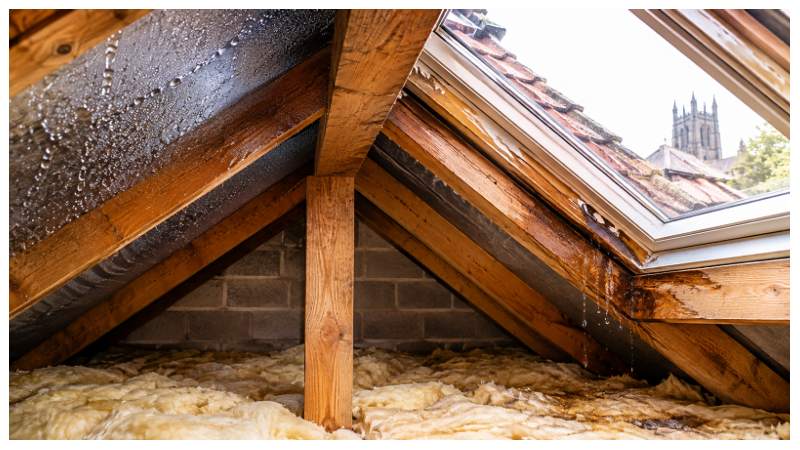
A damp patch on an upstairs ceiling feels like a leak, and sometimes it is one. Quite often, though, the roof is fine and the water has come from the air inside the house. The two problems need completely different repairs, and treating condensation as a leak, or a leak as condensation, wastes money and leaves the real cause alone.
We get called out to both, and the weather here doesn’t make the guessing any easier. Carlisle is a wet city, with long spells of rain and plenty of cold mornings, so lofts run damp if they aren’t ventilated and roofs get tested if they aren’t sound. Here’s how to tell which you’re dealing with, what to check, and what each typically costs to put right.
The Simple Differences
A roof leak is water getting in from outside. Condensation is moisture already in the house, hitting a cold surface and turning back into water. They can look similar on a ceiling, especially first thing in the morning.
A leak usually:
- Appears or gets worse during or shortly after rain, particularly with wind
- Leaves a brown or yellow stain, sometimes with a tide mark
- Shows a damp patch in the loft in a line or a spot, often near a chimney, valley, pipe or the eaves
- May drip, even slowly, after a downpour
Condensation usually:
- Is worse in winter, on cold nights and in the morning, and can appear when it hasn’t rained for days
- Shows as fine black mould, misted felt or beads of water on the underside of the sarking or the cold side of the insulation
- Affects a wider area, not a single drip line: the felt looks wet in patches, insulation is damp on top, and timbers may have a surface fuzz of mould
- Often comes with steaming bathrooms, clothes drying indoors and a loft hatch that gets left open
The awkward cases are a bit of both. A small leak keeps the loft humid, and then condensation makes it look worse than the leak itself. That’s why it pays to look properly before anyone starts stripping tiles.
What to Look at in the Loft
Go into the loft on a dry morning and again after a night of rain, and take a torch. Please don’t walk on the joists unless you know where it’s boarded.
For a suspected leak, look for daylight, dark streaks on rafters, and wet insulation in a line that you can follow to a junction. Water often runs along the timber before it drops, so the wet patch on the ceiling may be some way from the actual entry point. Check valleys, the back of the chimney, around soil pipes and at the eaves, where a slipped slate or a blocked gutter can push water in.
For condensation, look at the underside of the felt or boards. If it’s beaded with moisture across a wide area, and the tiles or slates above look fine from the outside, think ventilation and insulation first. Insulation that’s been stuffed right up to the eaves, blocking the airflow, is one of the most common things we find. So is a loft hatch with no seal, quietly feeding warm, moist air up from the landing.
A firm that does roof repairs day in, day out will usually want to see the loft and the outside before quoting, because the wrong diagnosis is expensive. If we think it’s condensation, we’ll say so, even if that means there’s no roofing job in it for us.
Why This Comes Up So Often Here
Carlisle sits close to the Solway and catches a lot of wet weather off the Irish Sea, with cold snaps that chill the roof covering overnight. That combination is hard on both sides of the problem. Rain finds gaps in older slate and sandstone houses, and cold roofs turn household moisture into water if the loft can’t breathe.
The older terraces in Denton Holme, Currock, Botcherby and Stanwix were built to be a bit draughty. Open fires pulled air through the house and lofts were rarely insulated to modern standards. Once the insulation goes in, the loft becomes colder and the rooms below warmer, which is what you want for the bills, but only if the eaves still have a clear path for air and the bathrooms have fans that actually extract. We often find the insulation has been well meant and well fitted, right over the vents.
Newer estates in Harraby, Belah and the edges of town can have the opposite issue: well-sealed houses, a lot of moisture from daily life, and a loft that was never given enough ventilation in the first place.
What Usually Puts It Right
If it’s a leak, the fix is on the roof: a slipped slate, a failed flashing, a blocked valley or a cracked pipe flashing. Those jobs are usually modest if you catch them early.
If it’s condensation, the roof covering can be left alone. The work is about moisture and airflow:
- Clear the eaves vents so air can get in at the edges and out at the ridge or through tile vents
- Pull insulation back from the eaves and lay it properly, without blocking the trays
- Seal the loft hatch and any holes where cables and pipes come through
- Make sure bathroom and kitchen fans extract outside, not into the loft, and that they run long enough
- In awkward lofts, add ridge or tile vents so the space can dry
A combination job, leak plus blocked ventilation, needs both doing or the damp comes back.
What Each Typically Costs in Carlisle
Typical 2026 prices for a standard house. Access and how easy the loft is to move around in will move the figures.
- Inspection with photos, loft and outside: £75 to £150
- Replacing a few slates or tiles and checking the felt: £150 to £450
- Re-dressing or replacing a small run of flashing: £200 to £450
- Clearing a valley or repairing a short one: £150 to £1,500, depending on whether it’s a clear-out or a replacement
- Eaves vents cleared and insulation adjusted: £150 to £400
- Adding tile or ridge vents to a loft that has none: £250 to £700
- A better-sealed loft hatch: £80 to £200
- Bathroom fan replacement, ducted outside: £150 to £350, if that’s the missing piece
If someone quotes you for a re-roof on the basis of a damp ceiling and hasn’t been in the loft, get another opinion. A re-roof on a typical semi here is £6,000 to £12,000, and it’s the right answer when the covering is finished, not when the loft just can’t breathe.
Getting a Straight Diagnosis
Ask the roofer to tell you, in writing, whether they think it’s a leak, condensation or both, and why. Photos help: a drip line on a rafter is a very different picture from beaded felt across a whole slope. Check they have public liability insurance, and treat a same-day, cash-only offer after a storm with the caution it deserves.
Don’t pay more than a modest deposit, 20 to 30 percent, before work starts, and get the diagnosis and the price on the same piece of paper. If two firms disagree, the photos from the loft usually settle it.
Got a damp ceiling and you’re not sure whether the roof is letting water in? Get in touch with Roof Repairs Carlisle and we’ll look at the loft and the covering before anyone talks about stripping tiles.
Frequently Asked Questions
How can I tell if a damp ceiling is a leak or condensation in Carlisle?
If the patch appears or worsens during rain, and you can find a corresponding damp line in the loft, it’s likely a leak. If it shows up on cold mornings, even after a dry spell, and the underside of the felt is beaded with moisture over a wide area, think condensation first. When it isn’t obvious, an inspection with photos of the loft and the outside is usually £75 to £150 and saves a lot of guesswork.
How much does it cost to fix loft condensation?
Clearing blocked eaves and adjusting the insulation is often £150 to £400. Adding tile or ridge vents, if the loft has no proper airflow, typically costs £250 to £700. A sealed loft hatch is a cheap extra, usually £80 to £200. The roof covering itself doesn’t need replacing if it’s only condensation.
Can a roof leak and condensation happen at the same time?
Yes, and they often do. A small leak keeps the loft humid, and poor ventilation then spreads the damp. You have to deal with both or the staining comes back. That’s why a quote should say which parts of the job are roof repairs and which are ventilation.
Should I take the insulation out if the loft is damp?
Not as a first move, and not without knowing why it’s damp. If a leak is wetting the insulation, the leak needs fixing and the wet insulation may need replacing. If it’s condensation, the insulation usually stays, but it may need pulling back from the eaves so the vents can work. Taking it all out and leaving the loft cold doesn’t solve the moisture at the source.
Will a new roof stop condensation in the loft?
Not on its own. A new covering might be tighter and better insulated, which can actually make an unventilated loft more prone to condensation, not less. If you’re re-roofing anyway, that’s the moment to get the eaves trays, insulation and vents right. If the covering is sound, spend the money on airflow rather than tiles.