
Three quotes on the kitchen table, and they don’t agree. One firm wants to replace a handful of tiles and re-bed the ridge. The next is talking about a full re-roof. The third is cheaper than both and doesn’t say very much at all. The gap between those numbers can be thousands of pounds, and the wrong choice is expensive in either direction.
We have this conversation on site a lot. Here’s a straightforward way to decide, the rule of thumb we use, and what each option typically costs in Dartford in 2026.
Start With the Age and What’s on the Roof
A great many houses here, particularly the 1930s semis and the postwar streets, are in concrete interlocking tiles. Those roofs often look respectable from the pavement long after the felt, the nails and the ridges have started to go. Clay tiles show up on some older houses nearer the town centre; slate is less common, but it needs a different conversation when it does appear.
A rough guide by age, assuming the roof has been reasonably looked after:
- Under 20 years: almost always a repair. A slipped tile, a leaking flashing or a failed ridge is a local job.
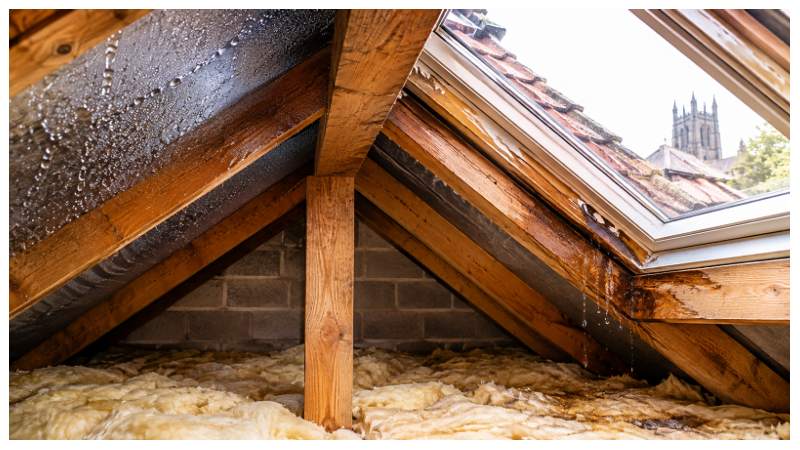
- 20 to 35 years: it depends on the survey. The tiles may have plenty of life left, while the felt and fixings do not. You only know once someone has looked properly, including in the loft.
- 35 to 40 years and older: replacement is often the honest answer, especially if there have been several leaks, the moss is heavy, or the ridges are sitting on the last lot of mortar.
Age isn’t everything. A 40-year-old roof with sound timbers and tiles that haven’t started to crumble can still be worth repairing. A 25-year-old roof that was poorly fitted, or patched after every storm, may not be.
Please don’t climb up to decide for yourself. Binoculars from the garden, a look at the gutters after rain, and a torch in the loft will tell you a great deal, and a roofer can do the rest.
The Rule We Use on Site
On a typical semi, we tend to think about it like this:
- Local, obvious faults and a sound covering: repair it. Replace the broken tiles, re-bed or dry-fix the ridge, sort the flashing, and clear the valleys.
- Repeated leaks, tired felt, and tiles failing in more than one place: replace that slope, or the whole roof if both sides are in the same state. Patching a worn covering just moves the next leak along.
- One tired slope and one decent one: it can be honest and cheaper to re-cover the bad side and repair the other, provided the ridge is finished properly and you accept the two sides may not match perfectly.
The next five winters matter as much as this week. If you already know a re-roof is coming in two or three years, a four-figure repair can be false economy. If you plan to stay and the covering is basically sound, a well-specified repair is the better spend.
A firm of roofers who do this work every week should come back with photos and a written recommendation, not just a number. If two quotes disagree, compare what they actually propose to do, and the photos, before you compare the totals.
What Each Option Typically Costs
Typical 2026 prices for a two-storey house, including labour and materials. Access on a mid-terrace, or a house with a steep pitch, will push them up.
- Inspection with photos, including the loft: £80 to £180, often deducted if you go ahead
- A few replacement tiles from a roof ladder: £150 to £450
- Re-bedding a ridge: £350 to £900
- Dry-fixing a ridge: £500 to £1,400
- Flashing repairs at a chimney or wall: £250 to £950
- A short valley repair: £150 to £1,500
- Re-covering one slope in concrete tile: often £3,000 to £6,500
- Full re-roof in concrete tile, average semi: £6,000 to £12,000
- Full re-roof in slate: usually more, often £9,000 to £16,000
- Scaffold: £500 to £1,600, more with a pavement licence
A quote for a repair should name the tiles, the fixings and whether felt or battens in that section will be renewed. A quote for a re-roof should specify the underlay, the battening, the ventilation, the ridge system and the guarantee, not just “new roof”.
What Local Houses Tend to Need
Temple Hill, Wilmington, Stone and the interwar streets around the town are full of concrete-tiled semis that are now at the age where ridges, nails and felt start to fail together. Older houses closer to the centre, and some streets towards Greenhithe, may have clay tiles or more complicated junctions, and matching materials can take longer.
The climate is drier than the west of the country, but it isn’t gentle. Wind across the Thames estuary will shift a loose ridge tile, and driving rain will find a tired flashing. Dartford Borough Council generally treats like-for-like repairs and re-roofing on an ordinary house as permitted development. Listed buildings, conservation areas and a change of shape or material should be checked before work starts.
If you have a mid-terrace or a semi with a shared hip or valley, confirm where your responsibility stops. A beautiful repair that ends halfway along a ridge is an awkward conversation with the neighbour, and sometimes a leak that simply moves sideways.
Hiring Without Getting Caught Out
Ask for public liability insurance of at least £2 million, a waste carrier licence if old tiles are coming off, and a written quote with a deposit of no more than 20 to 30 percent. NFRC membership or TrustMark registration is a useful filter, not a substitute for looking at recent local work.
Be wary of anyone who knocks after a storm and already has a price for a new roof. Get the covering made safe if it’s open, then take your own quotes. A year or two of guarantee on a small repair is normal. A longer guarantee on a re-roof should be a signed document that states what is covered, and for how long.
Roofers Dartford will look at the covering, the loft and the age of the roof and tell you whether a repair will honestly see you through, or whether you’re better to replace it once. That recommendation should be in writing, with photos, so you can put it next to any other quote.
If you’re weighing a repair against a re-roof and the quotes don’t agree, get in touch with Roofers Dartford.
Frequently Asked Questions
How much does a roof replacement cost in Dartford?
A full re-roof in concrete tile on an average semi is typically £6,000 to £12,000, including labour and materials but not always unusual access. Re-covering a single slope is often £3,000 to £6,500. Slate is usually higher, often £9,000 to £16,000. Scaffold, where needed, is commonly £500 to £1,600.
How much are smaller roof repairs?
A few tiles from a ladder are often £150 to £450. Ridges, flashings and short valley work usually fall between £250 and £1,500, depending on the job and the access. An inspection with photos is typically £80 to £180.
Can I repair now and re-roof in a few years?
Sometimes, if the repair is genuinely local and reasonably priced. If the felt is tired across the slope and the tiles are failing in several places, the repair money is often better put toward the replacement. Ask the roofer to say how many winters they honestly expect the repair to buy you.
Do I need planning permission to re-roof?
Like-for-like work on an ordinary house usually doesn’t need it. Listed buildings, conservation areas and a change of material or shape can. Dartford Borough Council is the planning authority, and a decent firm will help you check if there’s any doubt.
Why are the quotes so different?
They may not be quoting for the same work. One might be repairing the visible faults; another might be renewing felt and battens, or replacing the whole covering. Compare the specification and the photos first, and be cautious of a price that is much lower and much vaguer than the others.