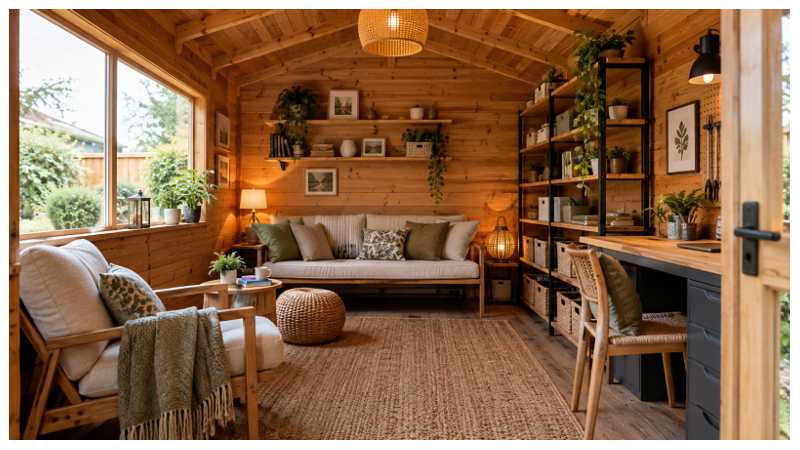
We spend months choosing paint colours, fabrics, and lighting for the rooms inside our homes, then treat the garden shed as though interior design stops at the back door. It does not have to. A wooden shed is, in the end, simply a small room, and with the same care you would give a spare bedroom or a snug, it can become one of the most charming spaces you own.
The best shed interiors feel like a natural extension of the house rather than an afterthought at the bottom of the garden. They borrow the same palette, echo the same materials, and share the same sense of personality, while adapting to the very different demands of a building that sits outdoors all year.
Start with the Shell
Good interiors depend on good bones, and in a shed the bones are the building itself. Before you think about cushions or colour, consider headroom, window size, and wall construction. A building that feels cramped or dark will fight every design decision you make, while one with generous height and good natural light gives you a flexible canvas.
If you are choosing a new building with interior styling in mind, look at sturdy timber sheds with enough headroom and window space to style properly. Thicker cladding also matters more than people expect, because it makes the walls far easier to fix shelving, artwork, and lighting to, and it holds a more stable temperature inside.
Walls: Lining, Colour, and Texture
Most sheds arrive with bare timber framing visible on the inside, which has a certain rustic charm but can look unfinished in a styled space. Lining the walls with insulation and then covering it with tongue-and-groove boards, plywood, or thin MDF panels transforms the room completely. It becomes warmer, quieter, and far more like an interior.
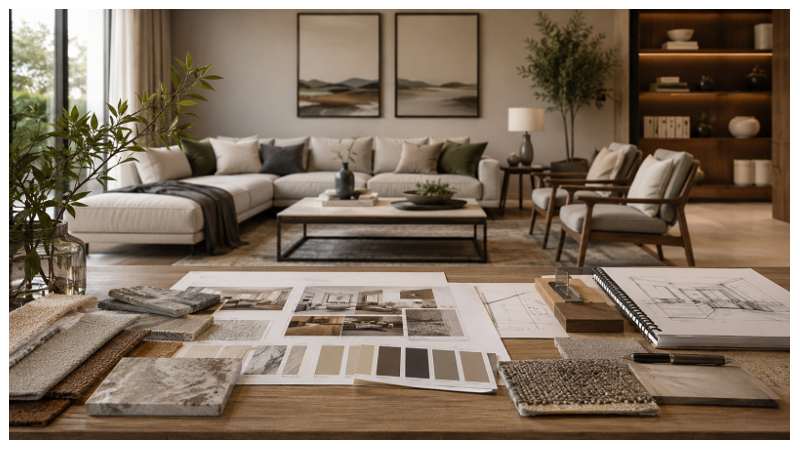
Colour is where you can bring the house outside. If your living room leans towards warm neutrals, carry a creamy white or soft stone shade into the shed. If your kitchen features a deep green or navy, a matching accent wall or painted door frame creates a lovely thread between inside and out. Chalky, matt finishes work particularly well in small timber buildings, lending a softness that suits the setting.
Do not be afraid of texture. Panelling, a single wall of reclaimed boards, or a limewashed finish all add depth in a way that flat paint cannot, and they suit the handmade character of a garden building beautifully.
Flooring That Copes with Garden Traffic
Shed floors see a great deal more mud, water, and wear than any room in the house, so practicality has to lead. Painted floorboards in a durable floor paint are hard-wearing and easy to wipe clean. Vinyl planks or tiles offer a more finished look and shrug off moisture. Natural fibre rugs such as jute and seagrass add warmth underfoot, though they are best lifted and aired regularly in wetter months.
Whatever you choose, a proper doormat just inside the door will do more to keep the space looking good than any other single item.
Lighting and Power, Done Safely
Lighting changes a shed from a daytime-only space into a genuine room. Layer it as you would indoors: a central ceiling light for practical tasks, a table or floor lamp for warmth, and perhaps a string of low-level lights along a shelf or beam for atmosphere in the evenings.
Any permanent electrical supply to a garden building must be installed by a qualified electrician using cables and fittings rated for outdoor and damp conditions. For clear, independent advice on what that involves and how to keep outdoor electrics safe, electricalsafetyfirst.org.uk is an excellent starting point. If you would rather avoid mains power altogether, rechargeable lamps and solar-powered lighting have improved enormously and can look surprisingly stylish.
Furniture Scaled to the Space
The single most common styling mistake in a shed is furniture that is simply too big. A full-sized armchair or desk can swallow a small building whole. Look instead for compact, lighter pieces: a slim writing desk, a bistro chair, a small upholstered armchair with raised legs so you can see the floor beneath it, which makes the room feel larger.
Built-in solutions work brilliantly. A bench seat along the end wall with storage underneath, a fold-down table, or floating shelves above a work surface all save space while giving the room a considered, bespoke feel. Wall-mounted pieces keep the floor clear, which is always the fastest way to make a small room feel calm.
Textiles and Soft Furnishings
Soft furnishings bring comfort and personality, but garden buildings present a real challenge: damp. Even a well-insulated shed can become humid in winter, and fabrics are the first thing to suffer.
Choose outdoor-grade or quick-drying fabrics for cushions and seat pads, and favour washable covers. Keep a basket by the door for throws and cushions that can come back into the house during the coldest months. Linen, cotton, and wool blends in muted, natural shades tend to suit timber interiors best, while a patterned cushion or two in a colour borrowed from your main living space ties the scheme together.
Storage That Doubles as Decoration
Even the most stylish garden room still needs to store things, and the trick is making that storage part of the look rather than something to hide. Open shelving in painted timber, with a considered mix of books, ceramics, baskets, and plants, can look every bit as curated as a living room bookcase. Woven baskets and lidded boxes keep the less attractive essentials out of sight while adding texture.
Pegboard is having a genuine moment in interiors, and it suits a shed perfectly. Painted in a colour from your scheme, it becomes a feature wall that holds everything from secateurs and string to a small mirror and a hanging planter, and it can be rearranged whenever you fancy a change. Vintage crates, a reclaimed dresser, or an old school cabinet also bring character and plenty of practical storage in one piece.
Seasonal Styling
One of the pleasures of a garden room is how naturally it changes with the seasons. In summer, strip it back: light linens, open doors, a jug of garden flowers, and very little else. As autumn arrives, layer in wool throws, a sheepskin over the chair, warmer lighting, and a few candles in lanterns. In winter, a heavier rug and a small stack of books turn it into a genuine snug.
Keeping a small seasonal box in the house, holding the throws, cushion covers, and accessories for the next few months, makes these changes quick and prevents textiles sitting unused in a cold building for half the year.
Linking Inside and Out
The final layer is the relationship between the shed’s interior and the garden around it. Frame the best view from the window with a simple blind or a short café curtain rather than heavy drapes. Bring plants inside, choosing varieties that cope with cooler temperatures and fluctuating light. Echo an interior colour outside with a painted planter or bench beside the door.
When it all comes together, the effect is lovely. You step out of the back door, walk through the garden, and open the shed to find a room that clearly belongs to the same home, just with a little more birdsong and a lot more peace.