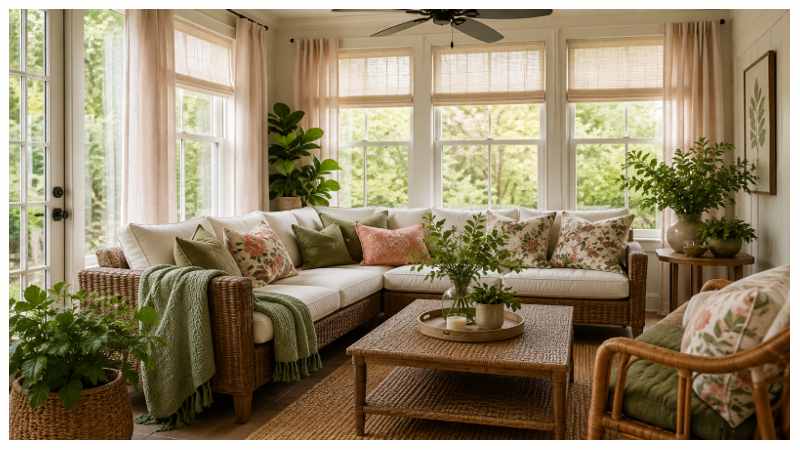
There is something special about a sunroom done right. It sits between the comfort of the indoors and the openness of the outside world, and when it comes together well, it becomes the room everyone gravitates toward. If you have been thinking about refreshing yours, the single most impactful change you can make starts with your seating. Specifically, it starts with your outdoor furniture cushions. The right cushions, paired with the right fabrics, can take a neglected sunroom and turn it into a space you actually want to spend time in, every single day.
This guide walks through how to think about your sunroom, choose cushions that deliver on both comfort and style, and pick fabrics that hold up beautifully over time.
Start With How You Actually Use the Space
Before you shop for anything, take a few minutes to think about what your sunroom is really for. Some sunrooms are bright morning coffee spots. Others double as reading nooks, afternoon nap zones, or the favorite gathering place when family comes to visit. How you use the room should drive every decision you make, from cushion thickness to fabric choice.
A sunroom used primarily for relaxing calls for thick, well-padded seat cushions that feel genuinely supportive. A space that sees a lot of foot traffic, especially with grandkids or pets nearby, needs fabrics that can handle a little more wear, resist staining, and clean up easily.
Knowing your “why” behind the space makes the rest of the process feel much less overwhelming.
Why Cushion Thickness Matters More Than You Think
If you have ever sat down on a beautifully styled piece of furniture and felt like you were sitting on a board, you know exactly what flat, worn-out cushions do to a room. The furniture might look lovely from across the room, but the moment you actually sit in it, the illusion falls apart.
Thick cushions do more than look inviting. They provide genuine support for your back and hips, which matters a great deal when you are spending an extended amount of time reading, talking, or simply enjoying the view. Thicker foam also tends to hold its shape longer, which means your sunroom stays looking as good in year three as it did on day one.
When shopping for replacement or new cushions, pay close attention to the foam density and fill thickness, not just the overall visual style. A cushion that looks full in photos but compresses significantly under weight is going to disappoint quickly. Look for cushions described as thick or high-density, and if possible, seek out options made with quality foam rather than budget-grade alternatives that break down faster.
The Fabric Factor: Choosing What Works for a Sunroom
Sunrooms are a unique environment. They tend to receive significant natural light, which means fabrics can fade if they are not designed to handle UV exposure. They can also get humid, especially in warmer months, which means mold and mildew resistance is worth factoring in.
Here is a breakdown of the main considerations when choosing sunroom cushion fabrics:
Fade Resistance
Sunrooms flood with natural light, which is part of what makes them so appealing. However, that same light can bleach color out of fabrics within a single season if the material is not up to the task. Look for solution-dyed fabrics, where the color is baked into the fiber rather than applied on top. These fabrics hold their color significantly longer, even in rooms with south- or west-facing windows.
Mildew and Moisture Resistance
Humidity is a real factor in a sunroom, especially if you live in a climate with warm summers or if the room is not fully climate-controlled. Fabrics that are engineered to resist moisture, dry quickly, and resist mold growth are genuinely worth the investment.
Ease of Cleaning
This one gets overlooked until someone spills something. Look for fabrics with removable, washable covers whenever possible. Being able to pull a cover off and launder it is a practical feature that keeps your sunroom looking fresh without a lot of effort.
Texture and Feel
Beyond performance, the fabric you choose should feel good to sit on. Look for textures that complement the look you are going for. A casual, beachy sunroom might call for something with a woven, relaxed weave. A more traditional or formal sunroom might lean toward a refined, slightly structured pattern. Neither is wrong. It just depends on the atmosphere you want to create.
Pulling the Look Together: Color and Pattern Tips
One of the most enjoyable parts of refreshing a sunroom is choosing the look. But it can also be one of the most paralyzing parts if you are not sure where to start.
A few guiding principles that tend to work well:
Start with what is already in the room. If your wicker or rattan furniture has warm, honey-toned tones, fabrics in earthy neutrals, soft greens, warm corals, and creamy whites all tend to complement it naturally. If the furniture has a painted or more contemporary finish, you have a bit more flexibility to play with cooler tones and bolder patterns.
Choose one statement fabric and one or two supporting ones. A common mistake is mixing too many patterns at equal visual weight. Instead, pick one fabric that does the heavy lifting, something with a pattern or color you really love, and pair it with a simpler coordinating solid or subtle texture for throw pillows or accent pieces.
Think about the view. One of the most underused design tools in a sunroom is the landscape outside. If your sunroom looks out onto a garden with lots of greens and natural tones, leaning into those colors inside creates a seamless, peaceful transition between indoors and out. If your view is more neutral, you have more freedom to bring in color through your cushions and fabrics.
Do not be afraid of pattern. Sunrooms feel relaxed and informal by nature, which makes them a great place to use patterns you might not try in a living room. Stripes, florals, geometric prints, and botanical designs all tend to feel right at home in a sunroom setting.
Mixing Old Furniture with New Cushions
One of the most common sunroom scenarios is this: the furniture itself is in perfectly good shape, but the cushions are flat, faded, or just not the look you want anymore. This is actually a great position to be in, because you do not need to replace anything expensive.
Well-made wicker and rattan furniture is incredibly durable. It is not unusual for pieces to last 20 or 30 years when they are properly cared for. What tends to go first are the cushions, which simply wear out with regular use.
Replacing the cushions on furniture you already love is one of the most cost-effective ways to completely transform a space. New, thick, beautifully patterned cushions can make a 15-year-old piece look like it just came out of a showroom. The furniture gets a second life, and you get the look of a refreshed room without the price tag of starting from scratch.
When replacing cushions on existing furniture, measuring carefully is essential. Cushions that are too small shift around and look sloppy. Cushions that are too large will not fit the frame properly and can create safety concerns. Take exact measurements of your existing seat pans, back frames, and any armrests before ordering anything. If you are unsure, many cushion specialists can help you sort out the right sizing.
A Few Finishing Touches That Make a Big Difference
Once your main cushions are sorted, a few small additions can bring the whole room together.
Lumbar pillows are a practical and stylish way to add back support to chairs and sofas. Unlike seat cushions, lumbar pillows are typically filled with polyfill and stuffed firmly, making them supportive without the bulk. They are also a great way to introduce an accent color or pattern without committing to it on your larger pieces.
Throw pillows in coordinating fabrics add layering and warmth to a sunroom. A few well-placed pillows on a loveseat or sofa instantly make the space feel more finished.
If your sunroom has a daybed or chaise, do not forget about those pieces. A thick, well-padded cushion on a chaise can turn it into a genuine relaxation destination, the kind of spot you find yourself gravitating toward on a slow weekend afternoon.
The Sunroom You Actually Want to Use
The best sunrooms are the ones people actually spend time in. Not the ones that look beautiful in photos but feel uninviting in person. That distinction almost always comes down to the quality of the seating.
The right cushions and fabrics will not just improve the look of the room. They will change how the room feels, how often you use it, and how much you enjoy it. That kind of return on a relatively modest investment is hard to beat.
Whether you are starting fresh or simply refreshing what you already have, take your time with the decisions. Feel the fabrics, consider the light in your space, think about how you actually want to use the room, and choose cushions that are thick enough to truly deliver on comfort.
A cozy, well-designed sunroom does not happen by accident. But with the right choices, it is absolutely within reach.